Homeowners and landlords are responsible for ensuring smoke and carbon monoxide alarms are in place and in working order as per the Ontario Fire Code. That means that you are responsible for installing, testing and maintaining all smoke and carbon monoxide alarms within your home or property. This includes:
| Installation |
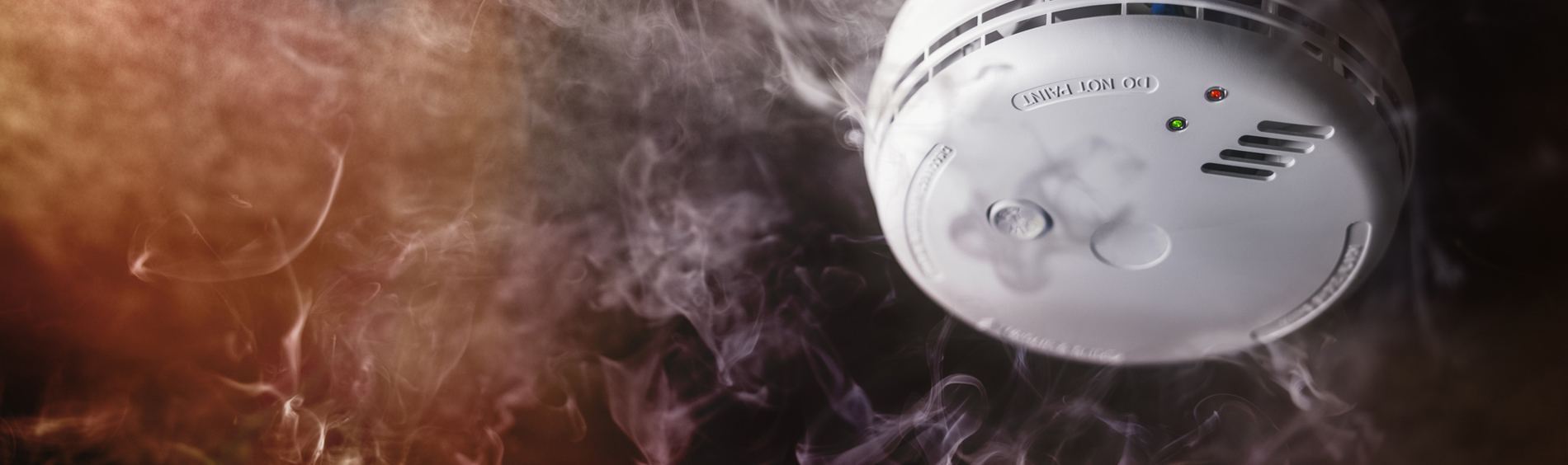
When installing a smoke alarm always read and follow the manufacturer’s instructions. Because smoke rises smoke alarms need to be affixed on, or near, the ceiling.
- Familiarize yourself with the alarm’s instruction manual and the features of your alarm to ensure you can hear and recognize the sights and sounds of the alarm.
- To avoid a false alarm due to cooking do not install smoke alarms directly inside the kitchen.
|
| Maintenance |
If properly installed and cared for most smoke alarms should last approximately 10 years. After a smoke alarm is installed monthly, semi-annual and yearly maintenance is required to ensure your smoke alarms are functioning at peak performance:
- Monthly: test smoke alarms once a month by pressing the test button on the face of the alarm to confirm that the alarm is functioning. Use the handle of a mop or broom so your feet never have to leave the ground.
- Semi-annually: there are two kinds of smoke alarms – battery operated and hardwired. Change the batteries in battery-operated alarms two times per year. Most hardwired alarms now contain a concealed battery back-up that cannot be changed.
- Annually: once a year it is time to clean your alarm. Dust and debris from day-to-day life can accumulate in the sensing chamber of your alarms. Vacuum the sensing chamber and other openings of the alarm or blow them out using compressed air. Re-install the alarm and test that it is working by pressing the test button on the face of the alarm.
While you have your alarm down check the side or back of the alarm for a replacement date. If the alarm is ten years or older it is time to replace it with a brand new alarm – even if it is hardwired.
|
|
Requirements
|
|
Please review the Ontario Build Code requirements below based on the year your home was built. Homes built after 2012 will need to meet all the requirements outlined for 2012.
| Ontario Building Code Edition | 1975 | 1983 | 1986 | 1990 | 1997 | 2006 | 2012 |
|---|
| Smoke alarms must be audible in bedrooms when the door is closed |
Required |
Required |
Required |
Required |
Required |
Required |
Required |
| Battery operated or hardwired smoke alarms permitted |
Required |
|
|
|
|
|
|
| Smoke alarms installed on or near the ceiling and in accordance to manufacturer’s instructions |
Required |
Required |
Required |
Required |
Required |
Required |
Required |
| Smoke alarms between bedrooms and the remainder of the home |
Required |
Required |
Required |
Required |
Required |
Required |
Required |
| Smoke alarms on every storey of the home (including the basement) |
Required |
Required |
Required |
Required |
Required |
Required |
Required |
| Smoke alarms shall be hardwired and interconnected if more than one alarm is required |
|
Required |
Required |
Required |
Required |
Required |
Required |
| Smoke alarms hardwired to the home’s power supply (must remain hardwired when replacing) |
|
Required |
Required |
Required |
Required |
Required |
Required plus seven day battery backup |
| Smoke alarms must be within 5 metres (15 feet) of any bedroom door |
|
|
|
|
Required |
Required |
Required |
| Smoke alarms in every sleeping room |
|
|
|
|
|
|
Required |
| Smoke alarms must have a visual component (such as a strobe) with a temporal or voice/temporal sound pattern |
|
|
|
|
|
|
Required |
- On March 1, 2006 the Ontario Fire Code required smoke alarms on every storey of every home resulting in the retrofit of all homes constructed prior to 2006, the additional smoke alarms are permitted to be battery operated.
|
| Landlord/Tenant Responsibilities |
Landlords must:
- Install smoke and carbon monoxide alarms based on the Ontario Fire Code
- Maintain smoke and carbon monoxide alarms by ensuring they are in operating condition
- Provide a copy of the manufacturer’s maintenance instructions to the tenant
Tenants must:
- Not disable smoke or carbon monoxide alarms
- Notify their landlord as soon as they are aware that a smoke or carbon monoxide alarm in the unit is disconnected, not operating, or impaired
- Contact Brantford Fire at 519-752-0540 if your landlord is in violation of the Ontario Fire Code.
The penalties for violating these requirements under the Fire Protection and Prevention Act (FPPA) are:
-
An individual convicted of an offence is liable to a fine of not more than $50,000 for a first offence and not more than $100,000 for a subsequent offence, or to imprisonment for a term of not more than one year, or to both.
-
A corporation convicted of an offence is liable to a fine of not more than $500,000 for a first offence and not more than $1,500,000 for a subsequent offence.
-
A director or officer of a corporation who knows that the corporation is violating or has violated a provision of the fire code is guilty of an offence and on conviction is liable to a fine of not more than $50,000 for a first offence and not more than $100,000 for a subsequent offence or to imprisonment for a term of not more than one year, or to both.
- Every director or officer of a corporation who knowingly commits an offence is guilty of an offence and on conviction is liable to a fine of not more than $50,000 for a first offence and not more than $100,000 for a subsequent offence or to imprisonment for a term of not more than one year, or to both.
|
If a fire was to occur at your home or property, and you fail to meet the requirements outlined by the Ontario Fire Code, you could receive multiple fines starting at $240.
Questions? Reach out to us at fire@brantford.ca or call 519-752-0540 ext. 5 for Fire Prevention.





 Subscribe to this Page

